ASKING QUESTIONS ISN'T OBSTRUCTION IT'S GOOD GOVERNMENT
One of the reasons I started attending local government meetings is because I believe the public should understand not only what decisions are made, but how those decisions are made.
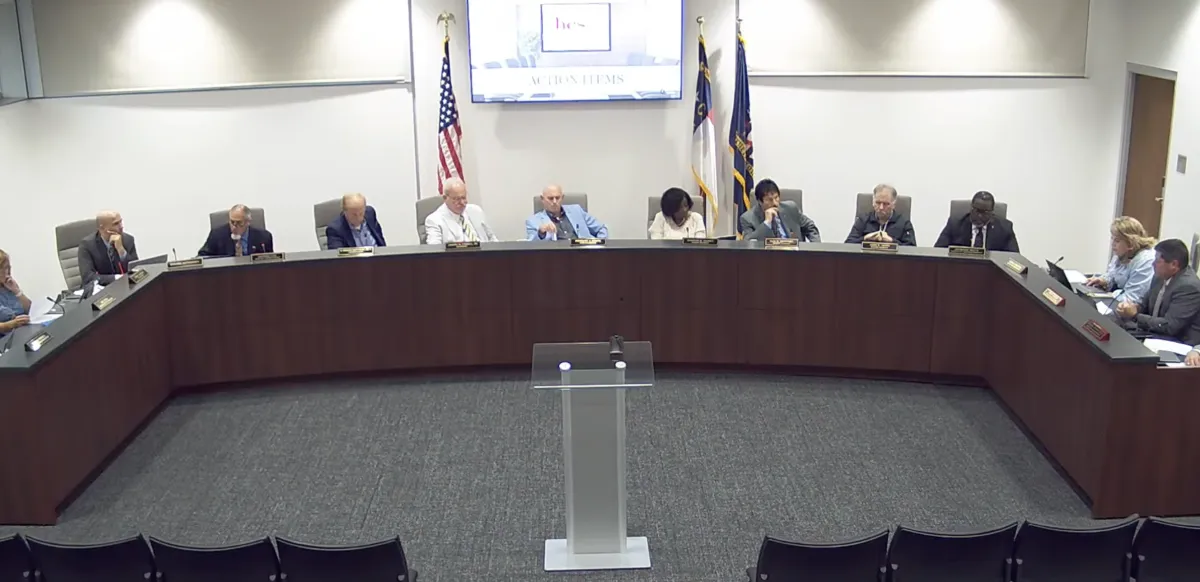
Over the past two weeks, I attended meetings of both the Harnett County Commissioners and the Harnett County Board of Education.
Although they govern different parts of county government, I noticed an encouraging similarity.
In both meetings, elected officials questioned significant requests for additional taxpayer funding instead of approving them without discussion.
A $121,000 Question
At the August 3, 2026, Harnett County Board of Education meeting, board members considered a $121,000 change order for additional construction testing and inspections associated with the new Flatwoods Middle School.
Board member Brad Abate immediately began asking questions.
He questioned why taxpayers were being asked to absorb additional costs that appeared to result from the contractor's original estimate. He also asked whether asphalt testing should have been anticipated from the beginning and noted what appeared to be inconsistencies in the change order documentation.
Those questions sparked a broader discussion among board members.
Rather than approving the request that evening, the Board agreed to table the item until the August 17 work session while staff obtained additional information from the contractor and project team.
A Similar Conversation at the Commissioners Meeting
Just days earlier, the Harnett County Board of Commissioners faced a similar situation.
Commissioners considered an additional $164,088 request related to the county morgue project for a new water line and fire hydrant.
Again, questions were asked.
Could this have been anticipated earlier?
Why was the additional funding necessary?
Could there be another solution?
Those questions matter.
Not because they necessarily change the final vote, but because they force everyone involved to explain the reasoning behind spending additional taxpayer dollars.
In fact, earlier questions about the morgue project ultimately helped reduce the proposed cost significantly before it returned to the Board.
Oversight Is Not Being Difficult
Sometimes people assume that asking questions means opposing a project.
I disagree.
There is a difference between opposing a project and performing oversight.
Taxpayers expect elected officials to ask questions.
They expect them to understand the details.
They expect them to verify information before approving additional expenditures.
That's not being difficult.
That's fulfilling the responsibility voters entrusted to them.
Looking Ahead to August 17
The Board of Education will revisit this change order during its August 17 work session.
One question I'll be watching closely is whether the additional review changes the proposal.
Will the amount remain the same?
Will the contractor provide enough documentation to justify the increase?
Will additional information result in a lower cost?
We don't know yet.
But that's exactly why asking questions matters.
The Bigger Lesson
Whether it's the Board of Commissioners...
The Board of Education...
Or any other public body...
Good government requires more than motions and votes.
It requires thoughtful discussion.
It requires transparency.
It requires accountability.
And sometimes, it requires elected officials willing to ask uncomfortable questions before spending someone else's money.
Those moments deserve recognition.
Because good questions don't slow government down.
They make government better.
